
Welcome to BrashTalk #36
The Newsletter of the PTGA
In this issue:
- Opening Message
- Updates
- Arctic Pre-Season Summit – Link to watch
- New Provisional Assessors
- Staff Updates
- Advisory Board Updates
- AECO/IAATO Polar Field Staff Conference Insights
- Scuttlebutt
- Qualification Review Process
- Polar Bears International Resources
- Training and Development
- Look Up
- Guano Happens
- Surf Zone
- Guide Interview
- Chad Carey
- PTGA Guide Status Updates
Opening Message
With the transition to the Arctic season underway, this is our time to brush up on Arctic flora and fauna, complete firearms training, and immerse ourselves in the deep history and local cultures across the Arctic.
We, as a guiding community, are building momentum right now – for those who attended the recent AECO/IAATO Polar Field Staff Conference, it was energizing to see our community in person. We wish everyone could have been there, but the spirit of that gathering doesn’t have to stay behind in Lisbon. You can find ways to connect with fellow guides throughout this Arctic season. In fact, this was a key takeaway from the conference as you’ll see below – the learning shouldn’t stay in that room – it should spread across the industry and we can do that through community building.
Consider this newsletter a call to action to get together. Find one another in cafes and meet up with fellow guides in port cities like Longyearbyen, Tromsø, and Nuuk. A few favorites to look out for – Fruene and Cafe Huskies in Longyearbyen, Pascucci in Nuuk. Stop in and say hello to fellow guides. Ask for a ship tour if there’s time. This is how we all used to meet each other. Just because the industry is bigger now doesn’t mean we can no longer get to know one another.
At the PTGA, we have some exciting staffing updates. We recently welcomed our new Program Director, Stephi Walker (read below to learn more). I want to take a moment to thank our founder, Graham Charles, for all of his incredibly hard work in getting this association off the ground (which is a massive understatement). We’ll be sending out a proper thank you in our next newsletter.
We have a packed issue to get you fully prepped for the Arctic season ahead including insights from the field staff conference, a training and development refresher and a new Guano Happens Review.
Thanks so much for your continued support. Hope you enjoy this edition of BrashTalk.
All the best,
Sarah
Updates
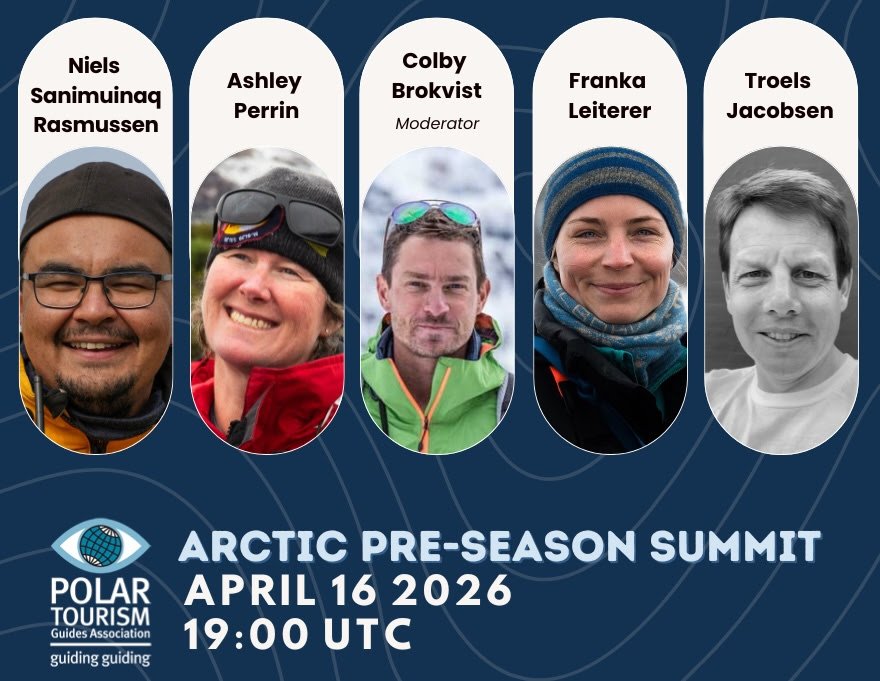
On 16 April 2026, the PTGA hosted an online Pre-Season Summit with a panel of polar professionals to discuss and highlight new information and knowledge to prepare for the Arctic season. This event covered updates from AECO, seasonal updates for the Arctic, guide resources and a discussion on professionalism and safe operations in the Arctic.
You can watch the summit here on our YouTube channel or in the resources section on our website.
New PTGA Provisional Assessors
Congratulations to Aaron Lawton, Bill Davis and Elsa Ross who were recently trained in Bozeman, Montana this past April!
PTGA Staff Team Update
Welcome to Stephi Walker! Stephi joins us as PTGA’s new Program Director
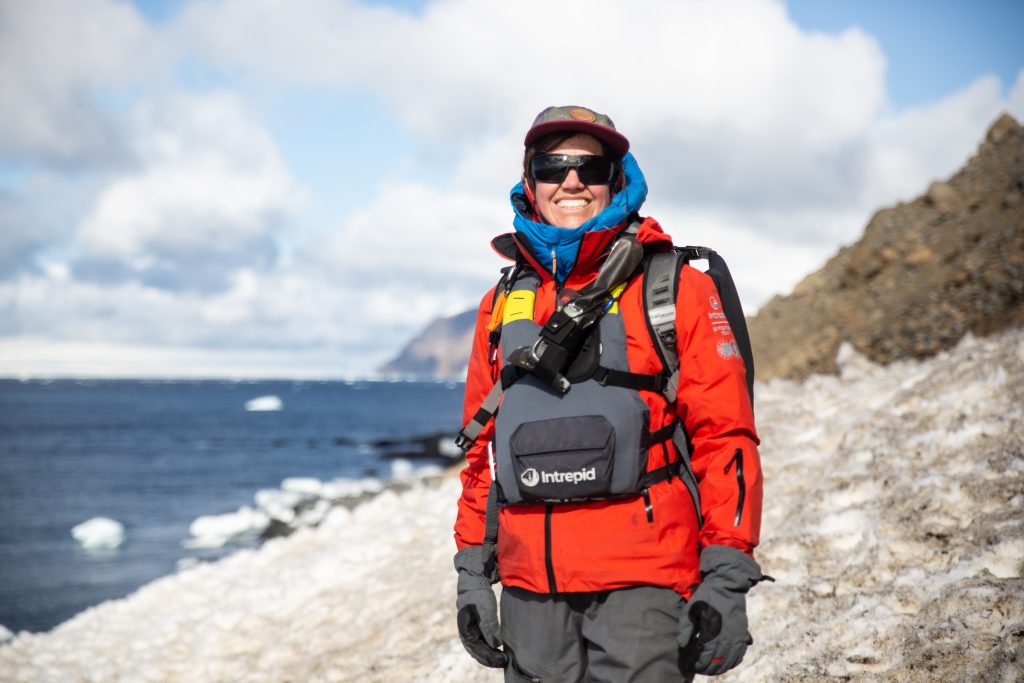
Stephi turned her Geoscience background into a career in outdoor leadership in 2012, eventually heading to Antarctica in 2015. Since then, she has logged extensive polar experience as an Expedition Leader, sea kayak guide, geology lecturer, and PTGA Senior Assessor running Assessor training courses in Europe and South America. Stephi brings strong operational expertise in remote risk management and program development, having led a Canadian outdoor youth non-profit. Originally from Scotland and now based on Canada’s East Coast, Stephi is a keen whitewater kayaker, a chronic wearer of hats, and leaves a piece of her heart permanently in Antarctica.
Advisory Board Update
We’ve expanded our Advisory Board and added one new Advisory Board member!
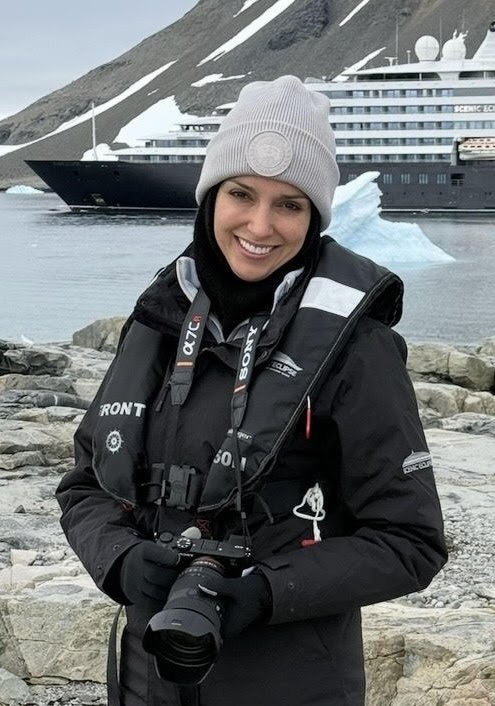
Welcome to Latifa Algurg! Our New Advisory Board Member
Latifa AlGurg brings a unique blend of her engineering background and creative vision with a multi-faceted career. After earning a degree in Electrical and Electronic Engineering and working in construction, Latifa founded the contemporary clothing brand, Twisted Roots, in 2014 (winning the design competition for the EXPO2020 Dubai volunteer uniforms). In 2020, she pivoted to consulting, helping fashion brands build sustainable businesses while spearheading local social impact initiatives within the UAE.
Latifa recently immersed herself in the polar tourism industry on an expedition cruise to Antarctica. This past year, as a part of her Master’s program in Non-profit Leadership at the University of Pennsylvania, Latifa supported the PTGA on a variety of initiatives including social impact measurement through the membership survey and focus group.
AECO/IAATO Polar Field Staff Conference:
Key Insights & Resources
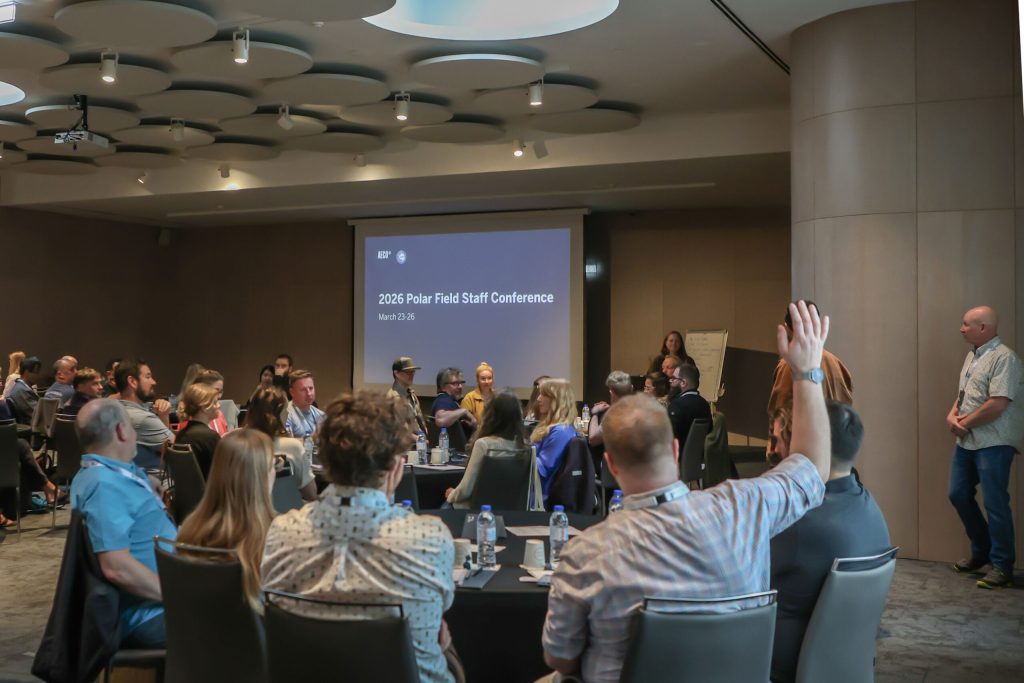
Photo Credit: Claudia Pereira/AECO
The core theme of this year’s conference focused on “Empowering the Polar Guiding Community.” The sessions highlighted that whether you have been guiding for decades or are just starting out, there are always opportunities to train, learn, and develop skills in these vital operational areas.
- Communication & Conflict Resolution
Navigating group dynamics and operational friction is a critical skill for field staff. A key takeaway was that conflict is predictable in expedition environments and most conflict starts as tension – your job is to sense this tension and act early. Developing individual and group communication skills is essential for catching conflict in its early stages and maintaining strong team dynamics.
- Feedback and Debriefing
Creating a top-down, team-wide culture where giving and receiving feedback is embedded into daily operations is crucial. Even quick, effective debriefs help teams grow. The discussions emphasized that challenges, incidents and near-misses are knowledge learned the hard way and essential for informing new procedures.
- Situational Awareness & Risk Assessment Tools
Because polar guiding takes place in inherently risk-filled environments, frequent and structured risk assessment is necessary. Valuable tools, models, and resources to utilize in your daily work in fast vs. slow decision-making include:
- AECO O-VRAT app – A risk assessment app available to AECO operators and field staff
- F.A.C.E.T.S. – A model to identify and avoid “heuristic traps” (mental shortcuts)
- GAR (Green-Amber-Red) risk assessment model
- WETTAP – A situational awareness and risk assessment matrix
- Speak Up: A major theme was the vital importance of empowering all team members – whether brand new or senior level to SPEAK UP when they notice a risk.
- Community Visits & Cultural Ambassadorship
Operations in local communities require proactive, respectful communication to ensure mutually beneficial visits. Reflecting on the dual complexities of guides serving as both field staff and cultural ambassador requires us to look at our interactions through a local lens – recognizing what it means to actually live amongst nature.
- Industry Updates
- AECO Updates: Check out AECO’s field staff section of their website for the latest updates and webinars for field staff.
- IAATO Updates: Keep an eye out in your email inbox for field staff webinars and updates for the coming season.
Final Takeaway
Ultimately, these gatherings reinforce the “why” behind what we do: the people we work with, the wildlife, the adventure, and experiencing the last great wilderness. Reporting challenges and debriefing as a collective community is the only way we can all develop and grow safely as an industry.
How PTGA Qualifications are Reviewed and Updated
Every two years, the PTGA’s technical sub-committee (comprising staff and Board members) conducts a comprehensive review of all our qualifications known as the Qualifications Review Meeting.
PTGA Assessors and Accredited Providers are invited to submit feedback. Whether it’s a minor grammatical fix or a syllabus update, these insights allow us to listen and learn from our community.
Following our upcoming review later this year, we will transition from our current 2025–2026 versions and publish the updated syllabi for the 2027–2028 cycle. In the meantime, you can access all current syllabi on our website here.
Polar Bears International Resources
Polar Bears International shared a resources for guides page here. Interested guides can download the newest version of their free polar bear handbook pdf, access maps and images to use in presentations.
Guides who provide their email addresses will receive a quarterly newsletter, but can opt out at any time.
Polar Bears International welcomes any feedback on their resources or requests for materials that might be helpful. Reach out to them here.
Receive This Newsletter in Your Inbox!
Be in the know. Opt in to receive Brash Talk directly in your email.
Training and Development
his briefing serves as a practical skills refresh for the PTGA Polar Operations Advanced Endorsement. It addresses the specific competency of managing small boats around dynamic environmental hazards – from icebergs and glacier faces to the risks of calving-generated waves, overhanging rock walls, caves, and avalanche-prone snow slopes or cornices.
The Blind Spot
For polar guides driving small boats and as seafarers, our risk assessment is naturally oriented downward and outward. We constantly monitor the sea state and wind, surface conditions and tide changes. We also have our GPS units and marine charts to navigate and look out for reef systems, hidden rocks, and shallow water.
While managing these underwater and surface risks is vital, it can create a critical blind spot. As small boat drivers, we do a fantastic job of assessing risks beneath us, but we cannot forget to look up.
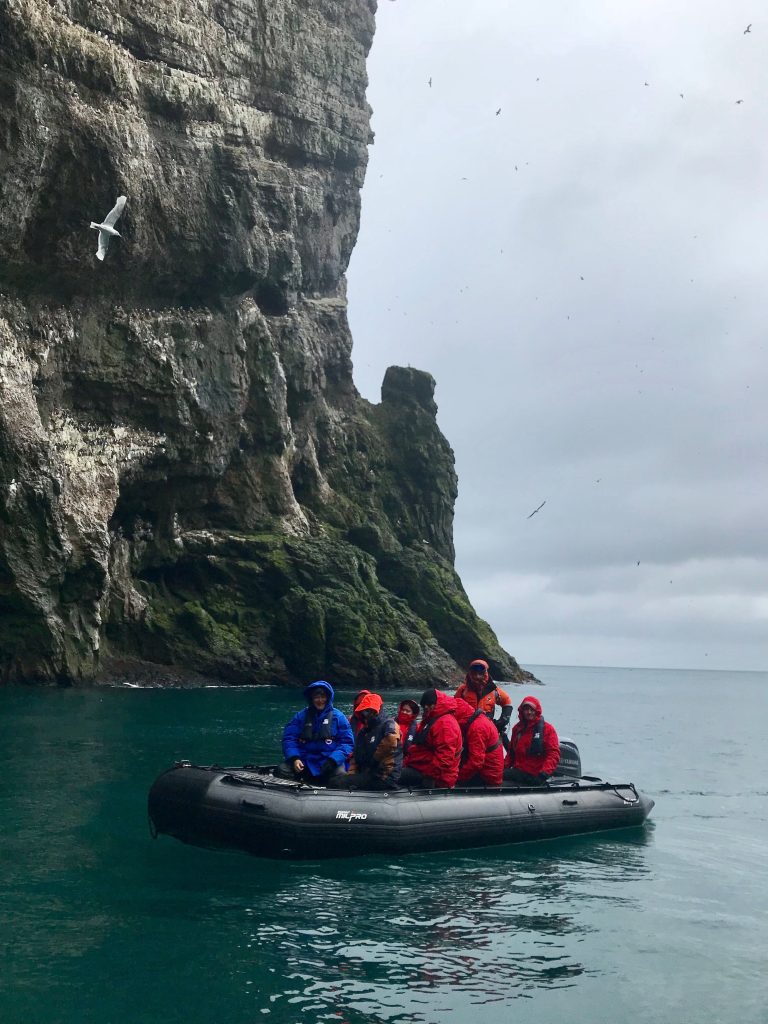
What’s Above You?
When we don’t scan above the horizon, we expose ourselves and our passengers to fast-moving hazards. Depending on your operational region, your overhead risk assessment should include:
1. Glacial and Snow Hazards
Overhanging Glaciers: Calving ice creates massive displacement waves and falling debris.
Cornices & Snow Slopes: Unstable snowpacks can trigger avalanches that reach the water line in no time such as at Enterprise Island (Antarctica).
2. Rockfall & Wildlife Cliffs
Nesting Bird Cliffs: If you are cruising the bird cliffs of Bjørnøya or the east coast of Svalbard, remember that these environments are dynamic. In Antarctica, think of Skontorp Cove near the nesting shags.
Unstable Rock Faces: Thawing permafrost in the north and nesting wildlife can dislodge rocks. Rocks fall fast and with no notice. In Antarctica, think of Edinburgh Hills or Spert Island.
Industry Lessons Learned
Over the years, the polar guiding community has faced numerous near-misses and received plenty of cautionary warnings regarding proximity to glaciers, rock walls, snow slopes and cliffs. A vertical wall may look static when in fact it can change at a moment’s notice.
Good Practices for the Field
To incorporate the Look Up principle into your daily small boat operations, practice the following:
Maintain Safe Proximity: Never underestimate the reach of a falling rock or calving glacier. Follow AECO and IAATO guidelines for distance from vertical faces, increasing that buffer zone in shallow areas, heavy swell, high winds, or rapid thaw conditions.
Conduct a Dynamic Risk Assessment: Before idling close to a feature for a guest viewing, scan the water and the sky. Look at the top of the ridge, not just the water line.
Brief Your Guests: Let your guests know why you are keeping a distance. Educating them on overhead hazards builds trust and manages expectations.
Remember: Safe navigation isn’t just about what’s under your keel – it’s about everything above your head, too. Keep your eyes open, stay alert, and don’t forget to look up.
Guano Happens
This issue of BrashTalk highlights an incident at St. Andrews Bay, South Georgia. It carries vital lessons about operating in surf conditions and underscores an industry-wide need for increased wave awareness.
As you read this narrative, we encourage you to reflect on your own experiences. Have you driven a boat in the surf at St. Andrews Bay or elsewhere in South Georgia? If so, you might have experienced a similar circumstance to this driver or EL. We often learn the most from our near-misses and it is important to reflect on that. We are grateful to the guide who took the time to share their story below so the rest of our community can learn from this experience.
Narrative:
Conditions were favorable for our landing, so we scouted south of the river as a potential landing site. After watching the sets for while we decided it was going to be too big, so went back to the usual landing site at the north end of the beach, which was quite calm.
We got all the guests ashore and things were going well but I was getting calls from staff across the river that they needed more staff there sooner rather than later. I decided to take a short-cut and sent a driver (unknown to me) with two staff members to go and land “quickly” for a touch and go on the south side of the river.
I had been told by a previous EL that the driver [I chose] was competent and experienced in surf. They surfed in on the biggest set of the day and finally stopped very high and dry up the beach. Then, while trying to get the boat back out, it got totally swamped.
The “quick touch and go” to deliver staff had now turned into a stuck boat with three staff on the beach, plus another boat with two staff setting up a very long tow line to tow the boat out through the surf. The tow worked well and everything was resolved but the ‘shortcut’ of trying to get more staff spread out quicker was an utter failure.
GH Review
The Expedition Leader (EL) acknowledges that operational pressures led to a rushed decision-making process. In an effort to expedite staff deployment across the river, the EL elected to conduct a “drop-and-go” landing on the south side using a driver whose surf-landing competence had not been personally assessed.
The decision was based on second-hand information regarding the driver’s experience rather than direct knowledge or verification. In hindsight, a more directive leadership approach, including a brief discussion of the plan, assessment of the driver’s experience, and clear operating parameters, would likely have identified the risks associated with the landing and prevented the subsequent incident.
Although the initial objective was to save time, the shortcut ultimately resulted in a significantly greater commitment of time and resources. What was intended as a rapid staff transfer evolved into a boat recovery operation requiring additional personnel and approximately two and a half hours to resolve.
This event highlights the risks associated with heuristic decision-making in dynamic environments. Time pressure can encourage reliance on assumptions and mental shortcuts rather than deliberate assessment. In surf and small-boat operations, such shortcuts are frequently exposed by environmental conditions, often with disproportionate operational consequences.
Key Learning: Verify competence directly when assigning personnel to higher-risk tasks, particularly when operational urgency exists. A short investment in communication, assessment, and direction can prevent considerably larger consequences later.
Many thanks for sharing. If you have a near miss or incident story to share for the Guano Happens Review we’d love to hear from you.
Meet your colleague: Chad Carey
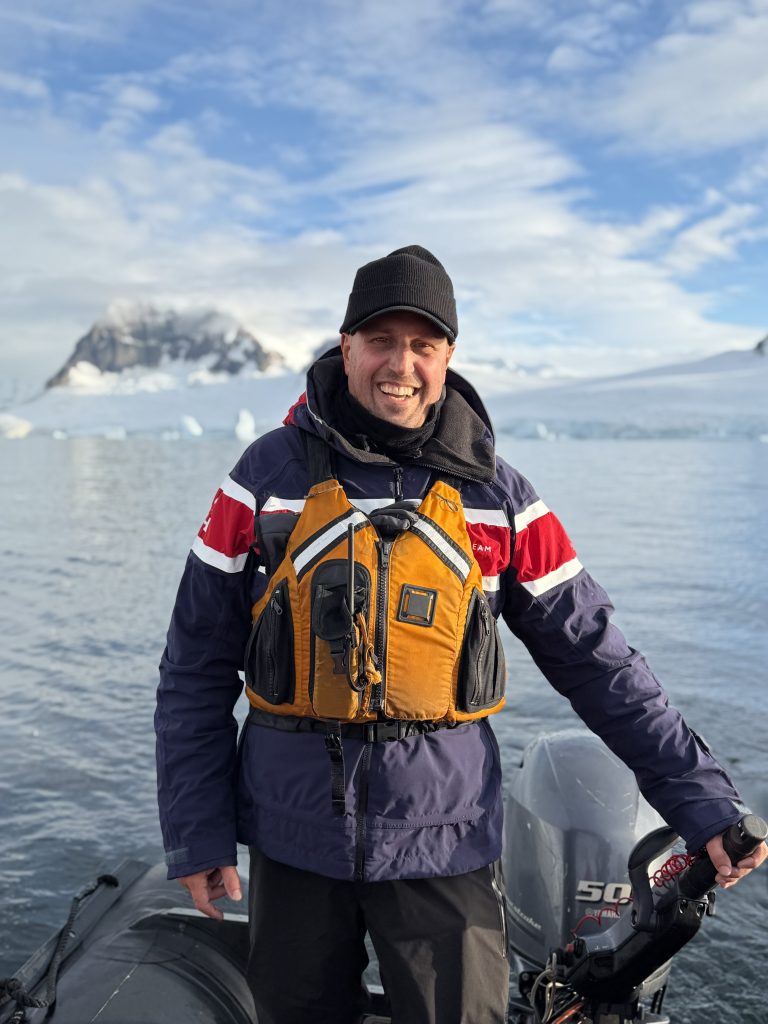
Chad Carey is the founder and owner of Chimu Adventures, but that’s just one of his hats. In recent years he has also worked as the Managing Director Intrepid Polar programme and has recently become a partner in the newly merged Polar Latitudes Expeditions entity. Chad also recently completed a two-year stint as the chair of the IAATO Climate Change Committee. Although Chad has travelled to Antarctica over twenty times on Chimu charters, Intrepid Polar and PLX departures, he’s never found the time to get qualified as a polar guide – until now. Chad recently became a PTGA member and is currently undertaking the PTGA qualification process.
PTGA: Some folks in the PTGA community know you as the founder of Chimu rather than as an expedition guide. What first pulled you into the polar world, and how did Chimu come about?
Chad: The original idea for Chimu came about during a dingy Hammersmith pub dinner with my original business partner. At the time, I was a 28-year-old disillusioned engineer working in London and I dreamt of finding more fulfilling employment. I decided to move home to Australia but took a career break for six months and travelled around South America on the way home. As I travelled, I wrote a business plan and worked on getting some angel investors for what was to become Chimu Adventures. Read More
You can find a list of our PTGA Accredited Providers here, PTGA Affiliate Members here, and our PTGA Training and Assessment Providers here.
PTGA Members – 800
Senior Polar Guides – 302
Polar Guides – 317
Polar Guide (Aspirant) – 149
Provisional and Full Assessors – 70
Senior Assessors – 6
Congratulations to our new status guides!
Polar Guide (Aspirant)
Albert Michaud, Anna Baranek, Anula Jochym, Brandon Bish, Chad Carey, Constantina Costa, Cristian Suazo, Cynthia Frankfort, Danna Walker, Eduard Cirer Salleras, Elisaveta Dombrovski, Gabriel El Gotas, George Threadingham, Gonzalo Peluso Arizcuren, Harry Alscher, Jacob Rogers, John Dickens, Karl Philips, Kelsey Mastaller, Kenna Kilne, Krista Stark, Laura Boenish, Lewie Chilcott, Luis Turi, Mauro Terradillos, Oscar Alvarez, Peta Laery, Ron Clifford, Ruby Schwarz, Sofia Benegas, Tracy Allen
Polar Guide
Anais Rekus, Aviaaja Schluter, Belen Lembo, Boo Borsberry-Woods, Carlos Mauer, Esther Josten, Lianne Thompson, Meike Sjoer, Patrick Horgan, Susanne Polap
Senior Polar Guide
Ben Comeskey, Daniel Lewis, Edelweiss Hauzer, Kelsey Camacho, Ruslan Eliseev
Provisional Assessor
Bill Davis, Aaron Lawton, Elsa Ross
Assessor
Mark Brophy


